
Mentors & Project Descriptions
Six Mentors have developed unique research opportunities, and each Partner will be placed under the direct mentorship of one faculty mentor, gaining authentic experience.
Please navigate the expanding table below to view each Mentor's project description.
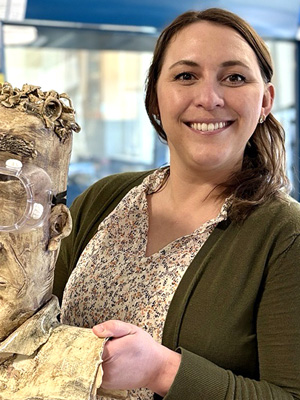
Faculty Mentor/Expertise: Madison Collins, Ph.D. – Microbiology, culture-based techniques, screening assays.
Project: Discovery of Soil-Derived Antimicrobials from MT Soils
Partners in this group will be engaged in authentic research through the Tiny Earth model, which aims to address the global antibiotic resistance crisis by sourcing novel antibiotic-producing bacteria from soil. Over the summers, teachers will participate in mentored, lab-based discovery and characterization of soil microbes capable of inhibiting the growth of safe relatives of drug-resistant pathogens. The first summer will focus on field collection, culturing, primary screening for antimicrobial activity, and metagenome profiling (16S rRNA). The second and third summer will emphasize isolate refinement, further species identification, and preliminary compound profiling. Teachers will gain technical and conceptual experience in microbiological methods, antibiotic discovery, and curriculum integration, preparing them to bring re-search-based inquiry into their classrooms and serve as mentors for future cohorts.
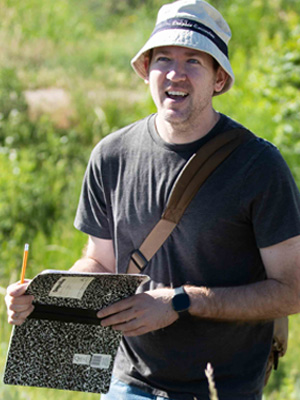
Faculty Mentor / Expertise: Jason Comer, Ph.D. – Botany, Molecular Systematics, Next-Generation Sequencing.
Project: Assessment of Plant/Microbial Community Response to Environmental Change
Partners working in the Comer lab would be able to explore field and/or lab research focused on local plant communities and associated microbial communities along the Yellowstone River. This research focuses on documenting plant biodiversity and how local plant/microbial communities change through time in response to environmental changes. Of particular interest are community responses to human mediated climate change and urbanization. Dr. Comer uses field and herbarium collections to evaluate community assemblages at the organismal level through measures of species and phylogenetic diversity. At the molecular level. Dr. Comer uses population genomics, next-generation sequencing, and bioinformatics to understand how genomes change over time. He also uses environmental DNA (eDNA) from water and soil to assess biodiversity, plant/microbe interactions, and evaluate implications for ecological and human health (e.g., antibiotic resistance). Broadly this project, along with the work of Drs. Collins and Cuddy, will help elucidate the connections between biodiversity, water quality, and human health.
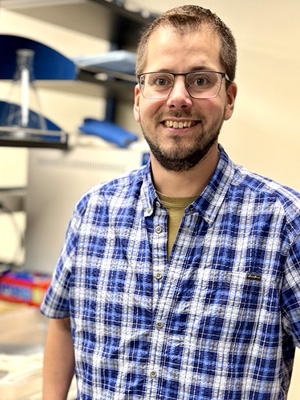
Faculty Mentor/Expertise: Michael Cuddy, Ph.D. – Physical/Analytical Chemistry, Environmental Science
Project: Water Quality, Environmental Assessment and Sensing
Partners in this group would seek to evaluate if integrated chemical and biological monitoring can be predictive of water quality and ecosystem health in rural watersheds. Our research integrates traditional chemical analysis with environ-mental DNA (eDNA) detection to assess water quality and biological diversity in surface waters of the Yellowstone and Missouri River watersheds. The project evaluates nutrient loads (e.g., nitrate, phosphate, ammonium), and physicochemical properties (e.g., pH, dissolved oxygen, temperature, conductivity), in the context of the presence of aquatic organisms and microbial pathogens identified via eDNA analysis. By combining field measurements with laboratory techniques, participants will generate a spatiotemporal picture of ecological aquatic health across rural and agricultural landscapes in Eastern Montana. The resulting data will feed into a geospatial database to support long-term environmental monitoring and public health initiatives. This project provides immersive research experience for secondary educators while contributing to Montana’s water resource knowledge base.
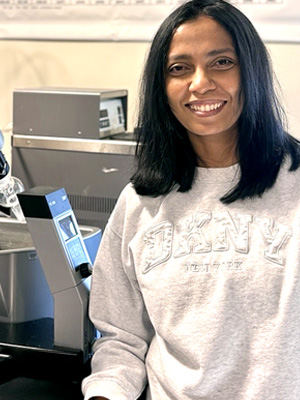
Faculty Mentor/Expertise: Hashini Herath, Ph.D. – Organic and Green Chemistry
Project: Green Chemistry & Organic Synthesis
Partners in this group aim to integrate green chemistry principles into organic synthesis to develop more environmentally friendly and cost-efficient materials in the laboratory. Building on my expertise in organic synthesis, this research seeks to establish a fundamental understanding of how nanoparticles can be engineered to create more selective and sustainable catalysts for converting biomass into fine chemicals. Our work focuses on the green synthesis of silver nanoparticles (AgNPs) from food waste, with particular emphasis on characterizing their chemical properties to assess their potential as sustainable catalysts. Specifically, this proposal targets the development of a novel catalyst by synthesizing AgNPs from banana peel extract, evaluating their effectiveness in biomass conversion, and testing their antibacterial activity against selected gram positive and gram-negative bacteria. In the laboratory, I use eco-friendly methods to synthesize AgNPs, characterize them using spectroscopic techniques such as UV-Vis and FTIR, and assess their catalytic performance in biomass conversion via mass spectrometry. In addition, the project examines the antibacterial properties of the synthesized AgNPs by collaborating with other PIs in the department. To extend the impact beyond research, this work supports secondary STEM education by designing hands-on activities that illustrate green chemistry principles in the chemical laboratory. For future Cohorts 2 and 3, our research questions will remain consistent with those established in Cohort 1 regarding the synthesis of nanoparticles from food waste. However, future work will explore the use of different types of food waste to synthesize nanoparticles, analyze their size and shape, and compare the results with the initial project. Additionally, we will investigate how the nanoparticles produced in these studies influence biomass conversion.
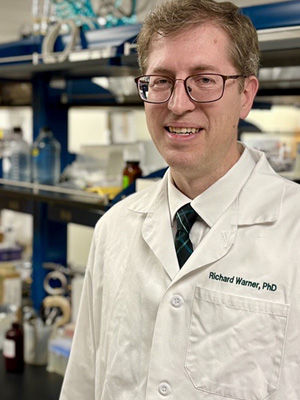
Faculty Mentor/Expertise: Richard Warner, Ph.D. – Cell Biology, Protein Biology, Cancer Biology
Project: Protein-Protein interactions with immune signaling proteins in melanoma
Educational partners working with the Warner lab group would be helping to make specialized gene fusions that allow for detailed protein interaction analyses. The Warner lab performs molecular cloning to engineer DNA and ultimately allow specialized protein complementation analyses. Specifically, the main goal of our cloning processes is to take the DNA of interest and make a gene fusion to a luciferase enzyme which has measurable light production upon protein interactions. These tools allow us to analyze the binding sites of two proteins with suspected interaction. We hope to identify protein interactions involved in tumor protective signaling, and the way in which they bind together, with the aim of providing new targets for melanoma therapy. Currently, in our protein interaction system, we are testing protein inter-actions with a soluble version of B7-H3, a transmembrane immune protein. Ultimately, our characterization of protein interactions will contribute new information about proteins involved in melanoma cell signaling mechanisms, and we hope by revealing these interactions to define valuable targets for immune-based therapies or other cancer therapies.
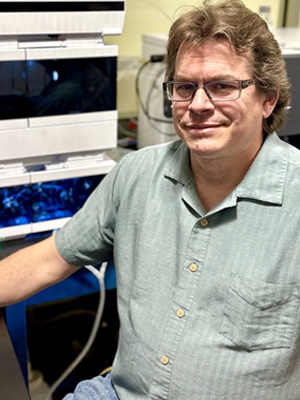
Faculty Mentor/Expertise: Daniel Willems, Ph.D. -- Biochemistry, lipidomics, dementia, and Mass Spectrometry
Project: Molecular Dynamics, Alzheimer’s disease, and Instrument development
The Willems research group welcomes educational partners into our university-level research laboratory, pursuing investigations in Alzheimer's disease (AD). AD remains the only leading cause of death and disease in the world with no effective low-cost diagnostic procedure, treatment, or cure. Our research efforts in AD are focused on three main areas: understanding AD through ‘omics (metabolism and related biological processes), iMD-VR driven drug discovery, and instrument development aimed at decreasing the reliance on human testing for potential pharmaceutical treatments. With the aid of mass spectrometry (MS) we use a multi-omics (metabolomic, proteomic, and lipidomic) approach to search for the causative agents of AD. Building on that data, iMD-VR is used for in-silico assessments of potential drug treatments and targets. Additionally, instrumentation that would allow drug testing of human cell lines is being developed in tandem.

Questions?
Contact Program Faculty Directors: Drs. Jason Comer & Michael Cuddy