
Circus Residency
Bring The Atomic Circus Residency to Your Middle School
A student-created science theater experience where middle school students build, test, revise, and perform scientific models through dance, music, narration, and visual art.
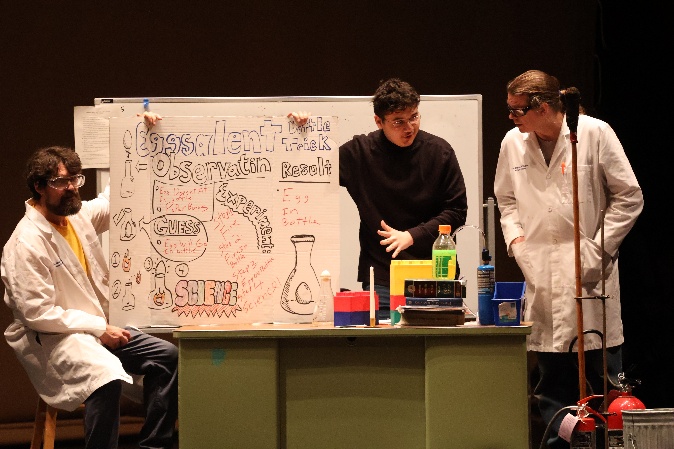
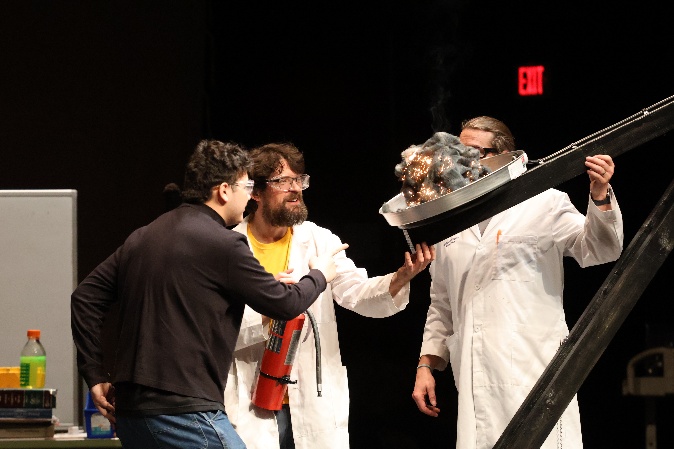
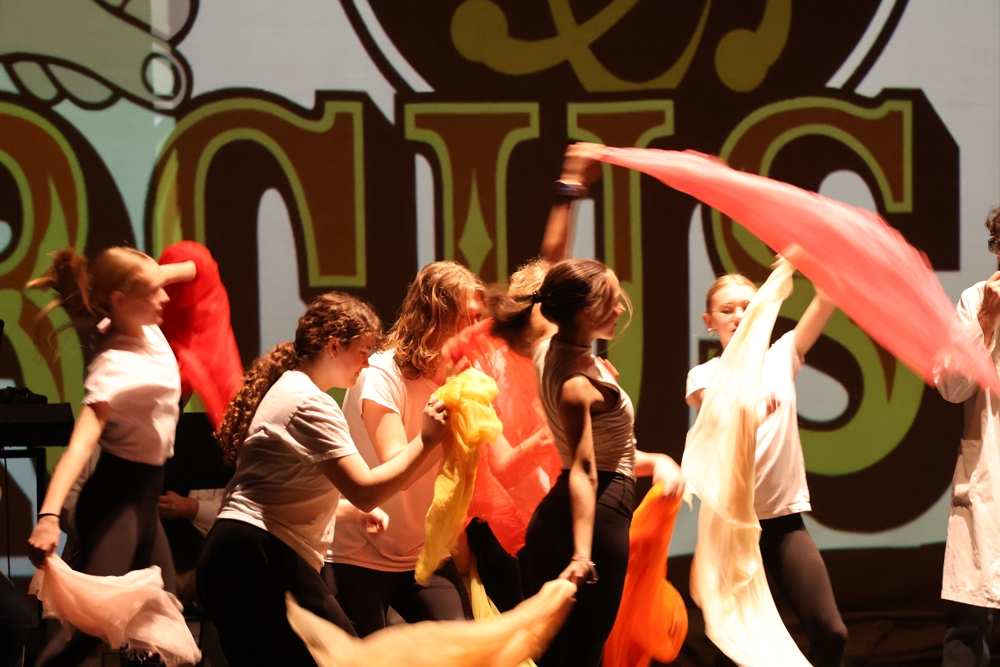
The Atomic Circus Residency is a four-day, school-based science theater experience where middle school students create a performance that explains scientific models through dance, music, narration, and visual art.
This residency is part of a proposed NIH science education grant focused on expanding meaningful STEM engagement for rural Montana students. The project is designed to help students understand how science works by building, testing, and revising models of invisible molecular-level processes.
Students do not just watch science happen. They create it, model it, revise it, and perform it.
This is a student-created science experience.
Students work alongside The Atomic Circus team and their teachers to turn abstract science ideas into a live performance. Through the residency, students learn how models help scientists explain things they cannot directly see, including molecular-level processes that underlie observable phenomena.
What students do
Students may participate through:
- science model-building activities;
- performance and movement;
- music and sound;
- narration and storytelling;
- visual art and projection design;
- public performance for peers and families.
What students learn
Students will learn to:
- build, test, and revise scientific models;
- explain invisible molecular-level processes;
- communicate scientific ideas through performance, music, narration, and visual art;
- see science as a creative and evidence-based process.
What schools receive if funded
Student-Created STEM Engagement
A hands-on experience that brings science, art, music, and performance together.
Teacher Compensation
Teacher partners will be compensated through the grant if funded.
Co-Teaching and Support
Teachers work alongside The Atomic Circus team and receive support through the residency.
Follow-Up Classroom Curriculum
Teachers receive classroom materials connected to the residency.
Biomedical Research and Career Videos
Students connect scientific modeling to Montana biomedical research and related STEM careers.
Family STEM Night / Public Show
The residency culminates in a performance for students and families.
Support for Event Costs
The grant will include support for appropriate space and event costs if funded.
Alignment with Eighth-Grade Science
The residency connects to eighth-grade science concepts and NGSS science practices, especially developing and using models.
What Teachers Need to Know
The Atomic Circus Residency is designed to support, not replace, classroom instruction. Teachers co-teach with The Atomic Circus team during the residency and receive follow-up materials they can use after the team leaves.
The project is especially relevant for eighth-grade science because students are encountering abstract concepts involving particles, gases, chemical and physical change, and invisible molecular-level processes. The residency helps make those ideas visible through student-created models.
Teachers may be involved in:
- co-teaching model-building activities;
- helping students revise scientific explanations;
- supporting performance, music, or visual art components;
- using follow-up classroom curriculum;
- connecting students to Montana biomedical research and STEM career videos.
The exact schedule, teacher roles, and school logistics will be worked out through conversation with each partner school.
Interested?
Interested in being considered as a partner school for the proposed NIH science education grant? We are currently talking with rural Montana schools about possible partnership. Schedule a short conversation to see whether the Atomic Circus Residency could be a fit for your school.
FAQ
This residency is part of a proposed NIH science education grant due in September. We are currently identifying potential partner schools.
The proposed project focuses on eighth-grade students in rural Montana middle schools.
If funded, the grant will include support for teacher partners, planning, and appropriate performance space/event costs.
The residency can involve science, art, music, performance, and visual media. In small schools, the same students may participate in multiple roles. In larger schools, different classes or groups may contribute different parts of the show.
Yes. Teachers co-teach alongside The Atomic Circus team and receive follow-up classroom materials connected to the residency.
Students help create a science theater performance using scientific models, movement, music, narration, and visual art.
A suitable stage or performance space is preferred. Specific space needs can be discussed during the planning conversation.
The goal is to help students build, test, revise, and communicate scientific models while increasing meaningful STEM engagement.
Schedule a conversation with Dr. Matt Queen and the ACES team.