
America Turns 250
MSUB Library Lecture Series, Fall 2026
Lectures
All lectures are Tuesdays evenings at 6:30pm in Library 152. Free and open to the public.
Library 152 is accessed from the lower lobby connecting the Library and the Liberal Arts Building.
Free event parking is at the MSUB Parking Garage.
The Montana Constitution Roadshow: A Shared Heritage
October 6, 6:30pm, Library 152
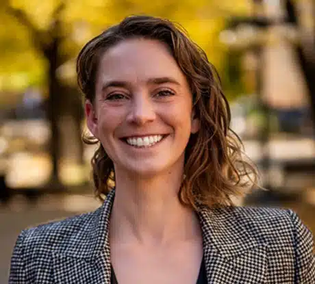
The Montana Constitution Roadshow: A Shared Heritage, with Rylee Sommers-Flanagan, invites you to explore the fascinating story behind Montana’s foundational legal document. After an introduction to constitutional democracy, Rylee Sommers-Flanagan offers glimpses into early Montana’s history, including growth through federal laws incentivizing investment in agriculture and the colorful history of the infamous Copper Kings’ domination of the 1889 State Constitution. From there, details about the 1972 Constitutional Convention are surfaced, followed by a look into how Montana values appear in our Constitution.
Through an informative set of narratives, as well as discussion of exciting and timely topics like government transparency and separation of powers, the audience will learn about:
- What a constitutional democracy is
- The rule of law
- The ways in which the Montana Constitution is special and distinct
Speaker
Rylee Sommers-Flanagan is a fifth-generation Montanan who grew up in Missoula and spent summers on the family’s working ranch in Absarokee. She founded Upper Seven Law in 2021, and in the years since, Upper Seven has filed 25 cases—prevailing in the vast majority—largely focused on challenging unconstitutional legislation and conduct on behalf of Montanans around the state. A graduate of Stanford Law School, Sommers-Flanagan served as president of the Stanford student chapter of the American Constitution Society. She graduated magna cum laude from Emory University. There, Sommers-Flanagan founded Emory’s Day On, a service day in honor of Dr. Martin Luther King. She also holds a creative writing degree from the University of St. Andrews.
Revolutionary: Who was Deborah Samson?
October 13, 6:30pm, Library 152

Speaker
Amy Harmon is a Wall Street Journal, USA Today, and New York Times Bestselling author. Amy knew at an early age that writing was something she wanted to do, and she divided her time between writing songs and stories as she grew. Having grown up in the middle of wheat fields without a television, with only her books and her siblings to entertain her, she developed a strong sense of what made a good story. Her books are now being published in more than twenty-five different languages, truly a dream come true for a little country girl from Levan, Utah.
Revolutionary Legacies: The Politics of Independence in the Early American Republic
October 20, 6:30pm, Library 152
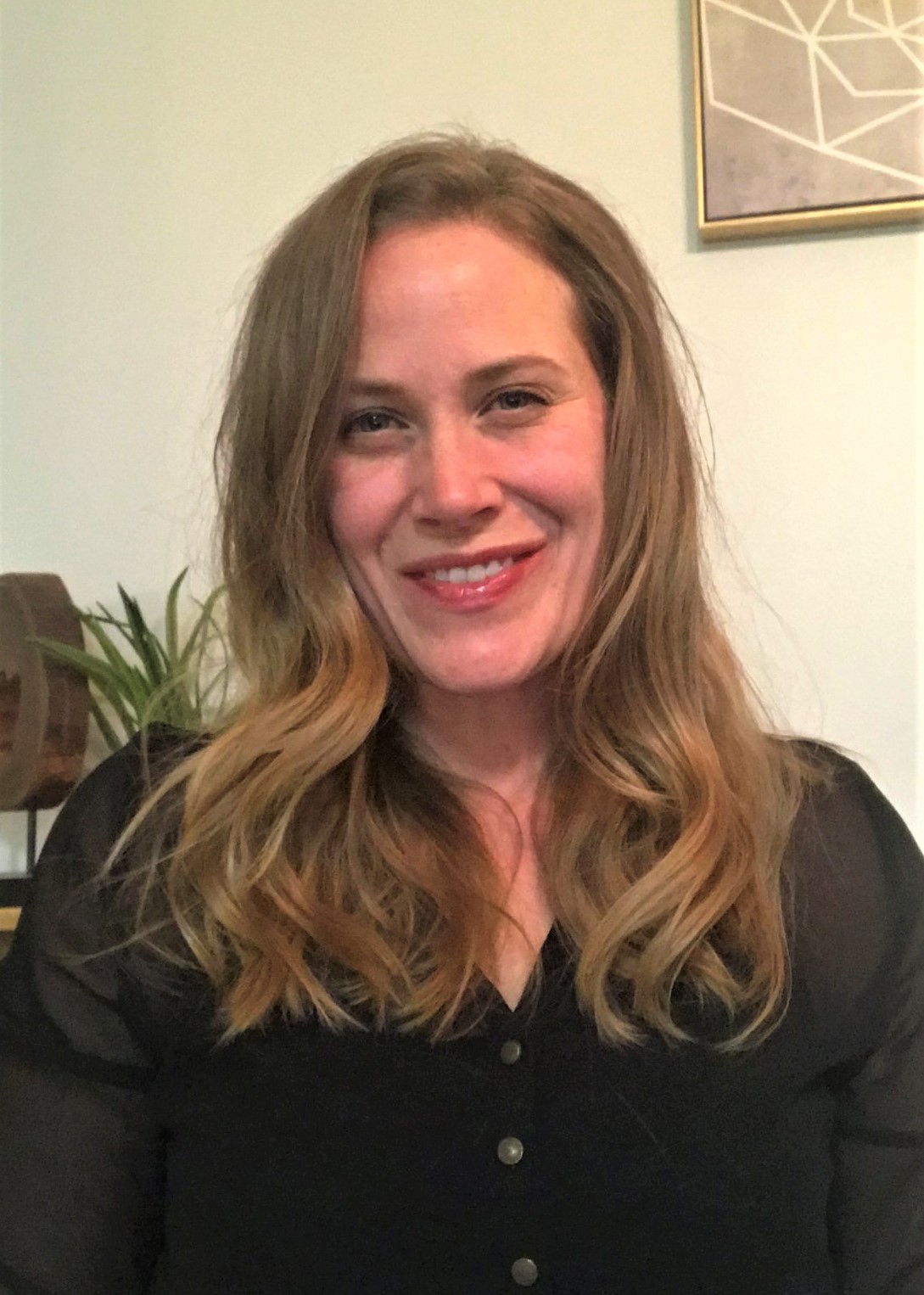
Although the Treaty of Paris officially ended the Revolutionary War in 1783, in many ways, the battle over independence was just beginning. In the years following the conclusion of the war, Americans sought to not only forge a new nation from the ground up, but to develop an identity separate from the British. Although the Revolution could serve as a cultural touchstone to bring the diverse peoples of the new republic together, as often as not, the legacy of the Revolution came to serve as a source of division in the heated battles for partisan control in the early national period. This talk will explore the ways that Revolution was remembered and manipulated by political actors in the earliest years of the fledgling nation’s history and offer insight into the ways that, even today, the past serves a political purpose.
Speaker
Emily J. Arendt, PhD, is Professor and Chair of History at Montana State University Billings, where she has taught since 2014. Her research interests center around partisan politics in the early American republic, particularly how non-voters—especially women—exerted influence to impact electoral politics and policy debates. She also serves as editor of The Panorama, the digital arm of the Journal of the Early Republic.
Testing the Limits of Revolutionary Fervor: The US Response to the Haitian Revolution, 1791–1804
October 27, 6:30pm, Library 152

From 1791 to 1804, enslaved men and women in the French colony Saint-Domingue fought for and achieved both emancipation within the French colonial system (1794) and, eventually, their national autonomy (1804). Haiti became the first successful slave insurrection to create an independent republic and was one of numerous anticolonial revolutions during the Age of Atlantic Revolutions (1775-1825). That same time period saw the USA reorient itself politically with a new constitution, less than a decade after inaugurating independence movements throughout the Atlantic world with the Treaty of Paris (1783). This presentation will look at the impacts the Haitian Revolution had on the presidencies of George Washington, John Adams, and Thomas Jefferson and will analyze the limits of revolutionary rhetoric as American citizens and politicians grappled with Black freedom, autonomy, and nationhood.
Speaker
Joseph D. Bryan is Associate Professor of History at Montana State University Billings, where he teaches courses on the 18th-century Enlightenment, the Haitian Revolution, and an international history of punk rock. He has published in the journals L’Esprit Créateur, Contributions to the History of Concepts, French Historical Studies, and Punk & Post-Punk.
Revolutionary Violence and the Origins of American Constitutions
November 3, 6:30pm, Library 152

The Revolutionary War was a war for independence but also for self-government. Americans engaged in writing new constitutions for their states and the nation at the very same moments as they mobilized for war, fought a regular marital conflict against Great Britain, and managed all sorts of irregular violence. This lecture suggests that the experience of war and violence, and the desire to bring order of revolutionary chaos, informed Americans as they wrote constitutions as much as, if not more than, abstract political philosophy or historical experience.
Speaker
Mark Boonshoft is Associate Professor of History and the Conrad M. Hall ’65 Chair in American Constitutional History at Virginia Military Institute. He received his Ph.D. from Ohio State University, was a postdoctoral fellow at the New York Public Library, and taught at Norwich University and Duquesne University. His first book, Aristocratic Education and the Making of the American Republic was published in 2020 and was a finalist for the George Washington Book Prize. Boonshoft's next book, The Violent Origins of Constitutional Democracy in Revolutionary New York is under contract with Yale University Press. Boonshoft also serves co-editor of the Journal of the Early Republic.
Traveling Exhibits
The exhibits will be browsable during the Library's open hours during the listed dates. The public (and school groups) are welcome.
Please note that campus parking policies are enforced before 5pm.
The Montana Tapestry: People and Places from 1776 to Today
September 21 – November 13, Library 2nd Floor
Montana Tapestry is a five-panel pop-up banner exhibit that introduces eight Montanans who have made significant contributions to the state and nation since 1776. Guided by the Dakota phrase Mitakuye Oyasin — "all my relations" — the exhibit invites viewers to consider how they are connected to Montana and the United States across past, present, and future.
Exhibit Partners
Montana Tapestry is a project of the Montana250 Commission, in partnership with the Montana Historical Society and Humanities Montana.
The American Revolution Experience
October 4 – 23, Library 2nd Floor
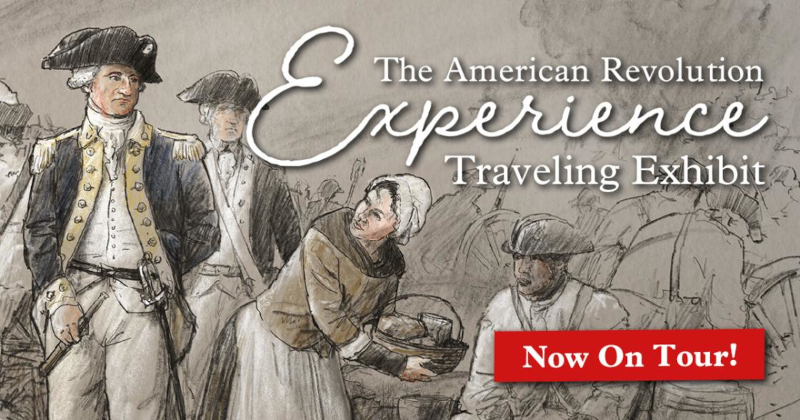
The American Revolution Experience is a pop-up display that invites visitors to consider the choice faced by members of the revolutionary generation as tensions mounted in the 1770s: Would these ordinary citizens risk their lives and livelihoods in pursuit of liberty? Or would they remain loyal subjects of the British crown, coming into conflict with neighbors and family? What would you choose?
The exhibit will be browsable during the Library's open hours. The public (and school groups) are welcome; please note that campus parking policies are enforced before 5pm.
Exhibit Partners
The American Revolution Experience is a collaborative project between the Daughters of the American Revolution and the American Battlefield Trust.